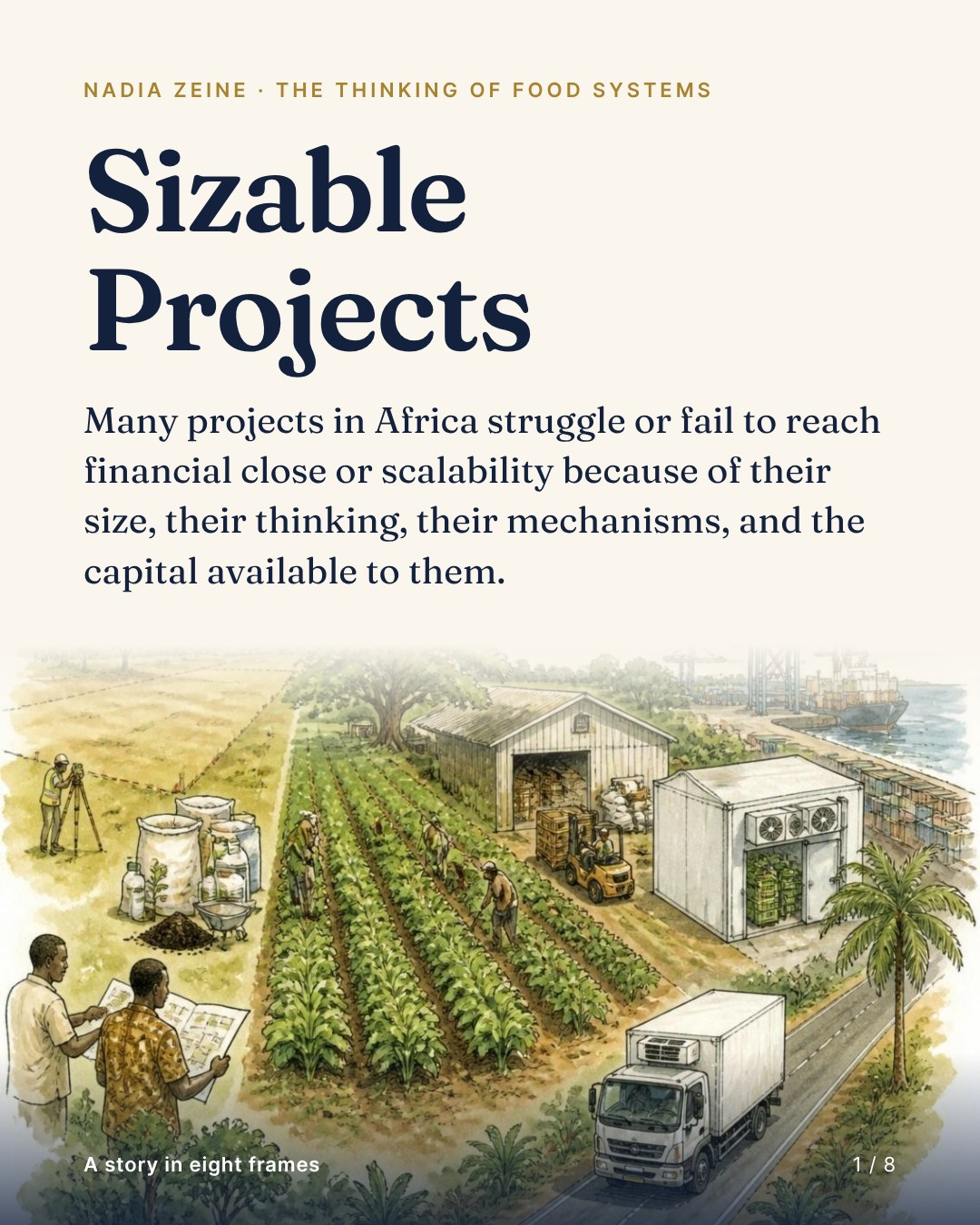
The story in eight frames. Download the frames (PDF)
Our first dryer came from China. It was a mechanized dryer. At the time, we thought it was mind-blowing because it could take 30 kg of leaf, but we did not understand the wet-to-dry ratio. 30 kg of fresh leaf was only going to produce about 3 kg of dry leaves. Drying took, depending on the temperature outside, anywhere from 18 to even 24 hours. This is super inefficient.
Then there was how much the gas would cost, how much time was spent, and how many people needed to stay on duty to keep changing the trays. Administering this dryer was a completely inefficient system in itself. Eventually, we got another dryer, a massive container retrofitted to do drying. That required capital, and we could afford it, and we did. It significantly increased our output, but it required investment.
Sufficient capital and knowledge, which also require investment, whether through consulting, through education or through time spent on research, would have addressed some of our earlier mistakes. We had to learn this by going through the motions.
By a sizable project, I mean an industrialized agricultural project in Africa.
I think many projects in Africa struggle or fail to reach financial close or scalability because of their size, because of their thinking, because of the mechanisms they have in place, and therefore, naturally, also because of the capital that is available to them.
One needs to think big, and one needs to think in terms of ecosystems
Taking it from the start, the first thing is to have a scalable vision. If you don’t, the forces that be, including economics or other unforeseeable circumstances, will take over. One needs to think big, and one needs to think in terms of ecosystems.
I believe that the reason we say there is so much potential in Africa is because so much of the value chain is either broken or nonexistent. A player within a value chain, or within an industry, will ultimately, for success and sustainability, need to consider playing a role in one to two, or even three, nodes before it within its value chain, and the same after it. Albert Hirschman called these backward and forward linkages, in The Strategy of Economic Development, published in 1958.
You will need to develop battle scars for land
Take a farmer, because this is always the easiest for me to reference. You would need to consider land acquisition, and not in the simple sense that you go somewhere and acquire land, as if there were a database of land that can be acquired or a simple mechanism for purchasing it. You will need to develop battle scars for land: land that is not rightfully that of the owner, or of the person who sold it to you; land that has also been sold to others; land you have bought where another family member or someone from the community does not agree with the sale.
The other things to consider are other sources of input, whether safe, productive and effective fertilizers or other agricultural inputs, or whether you will need to learn how to develop your own inputs, organic or inorganic fertilizers. It doesn’t matter. All this before you can even consider farming.
If you rely on other actors within your value chain, your project has a greater chance of losing
Afterwards, remember there are another two or three to consider. You have a farm, and now you need to consider warehousing or storage. Potentially it needs to be temperature-controlled storage. Then, also potentially, logistics: bringing it to market, bringing it to a different kind of warehousing, or even taking it to the port. If you don’t, and you rely on other actors within your value chain, your project has a greater chance of losing. When you look at these factors and you don’t look at the scale, this can become an issue.
You can only afford to invest in redundancy when it comes to scale
This is where scale comes in. In agriculture, one needs redundancy, and you can only afford to invest in redundancy when it comes to scale.
To become more efficient in agriculture, we need mechanization. We are not talking about smallholder farmers here, and not even yet about industrialized agriculture, but about commercial agriculture, for business and for growth. We need to invest in technology, in accounting software, ERP systems, HR systems and so forth, in order to run more efficient systems.
Because the margins within agricultural businesses can be low, whether on the production side or on the value addition side, in any manufacturing plant one needs to look at repeated processes and cut out inefficiencies. You can only do that when you measure systems, and you measure systems by investing in the measurement of systems, whether in human capital that has the capabilities to do so or, ideally, in technologies. Skill matters, because when you invest in any administrative or operating feature, one needs to be able to produce more or deliver more.
Low on the margin side and high on the risk side
On the point of capital: because of the margins and the natural risks inherent in working in the agricultural ecosystem, agriculture is low on the margin side and high on the risk side. It also means that, in agriculture, it is economies of scale.
Playing within the same league as other global counterparts
I want to end on the importance of scale and the importance of industrialization, on the premise my thinking started out with. Not only are there economies of scale in agriculture, but when you work in a system or in a geographical area where value chains are broken under the guise of opportunity, we only stand a chance at playing within the same league as other global counterparts by playing within our ecosystems, or even designing the ecosystem itself.
References
Hirschman, A. O. (1958). The Strategy of Economic Development. New Haven: Yale University Press.